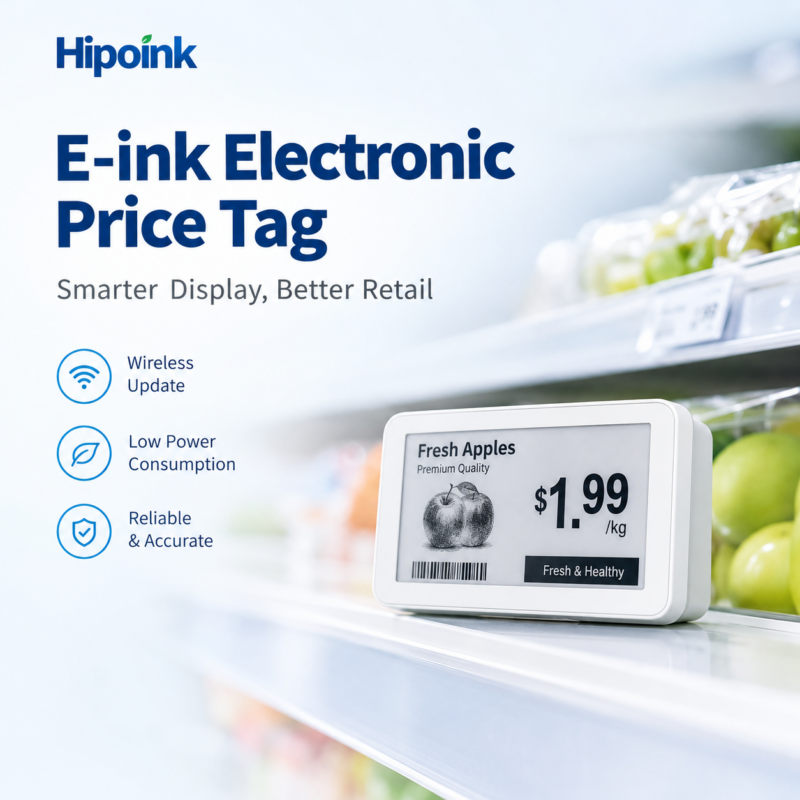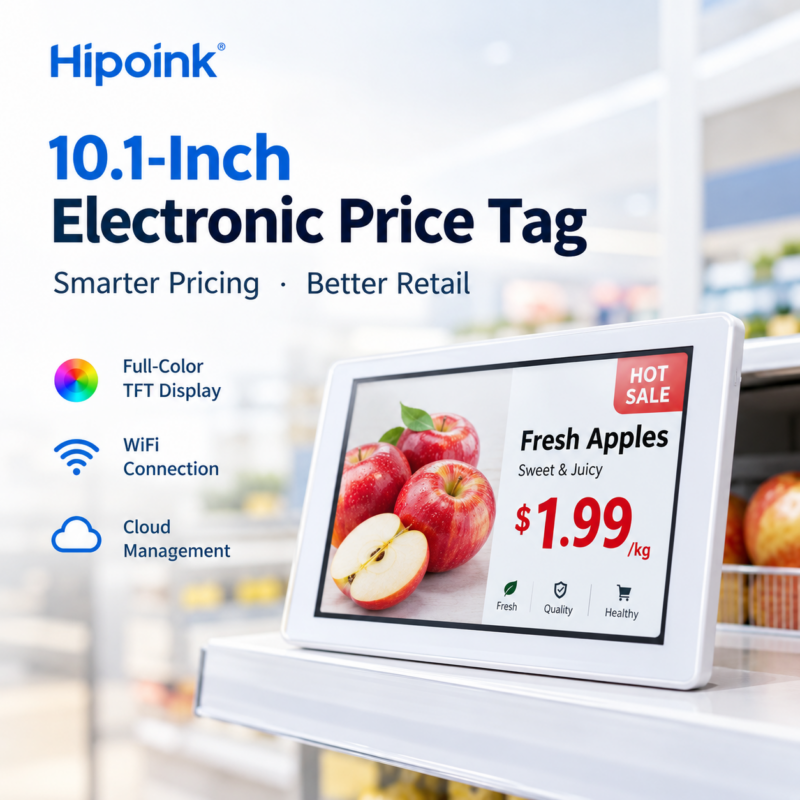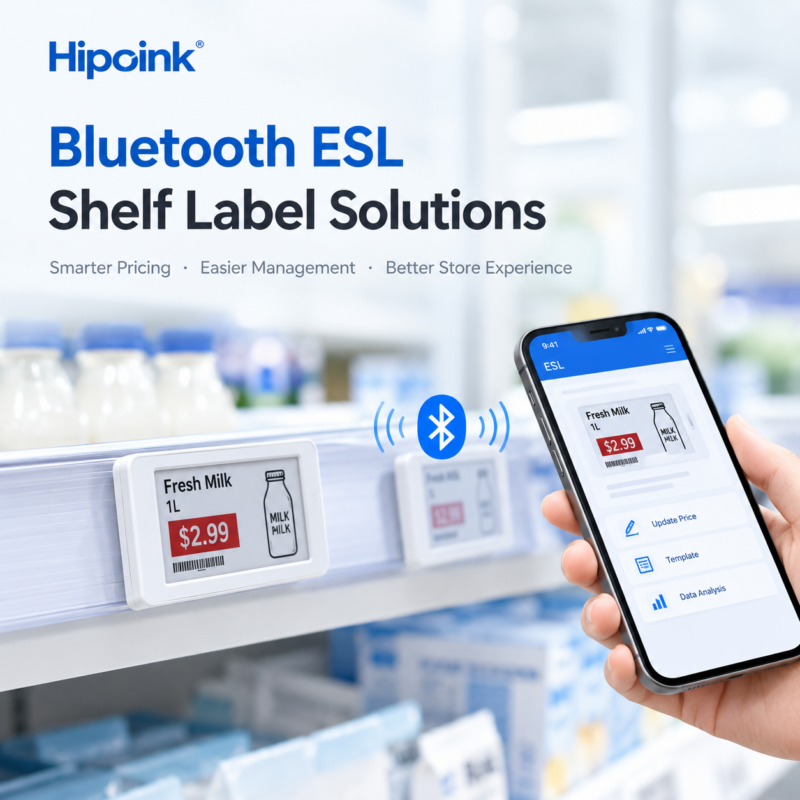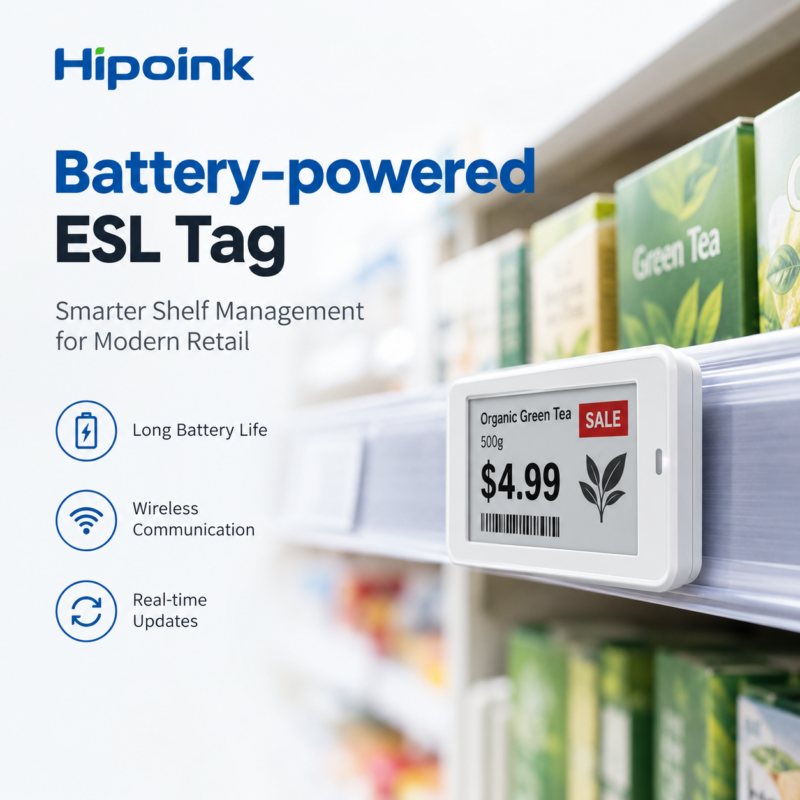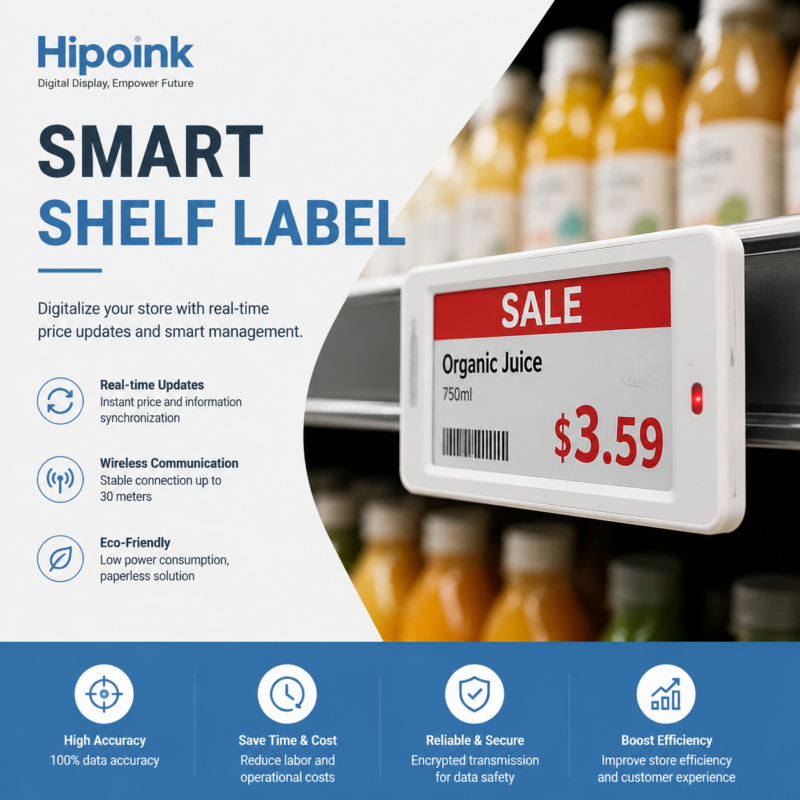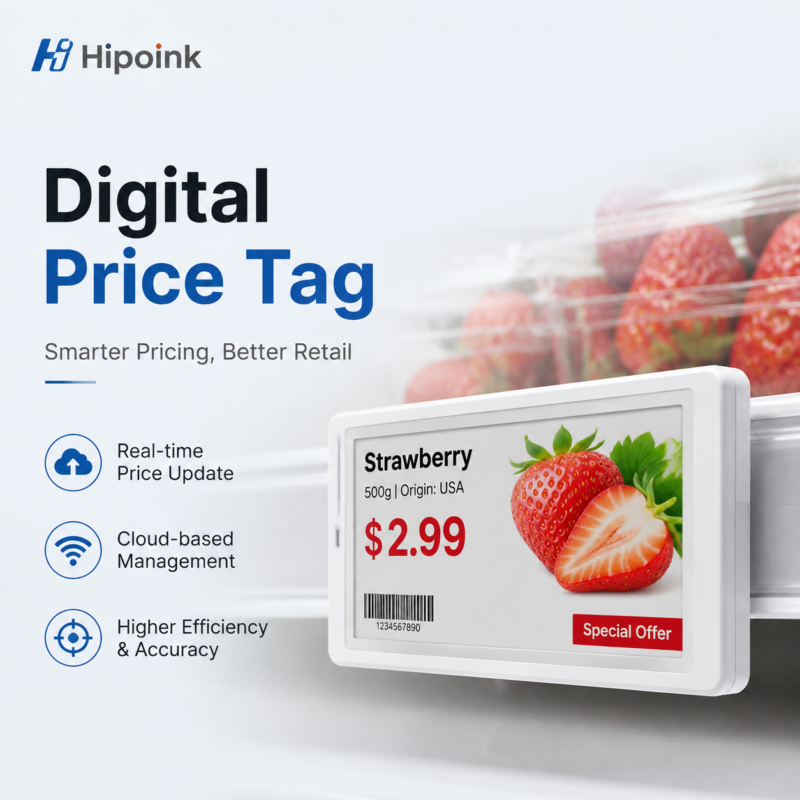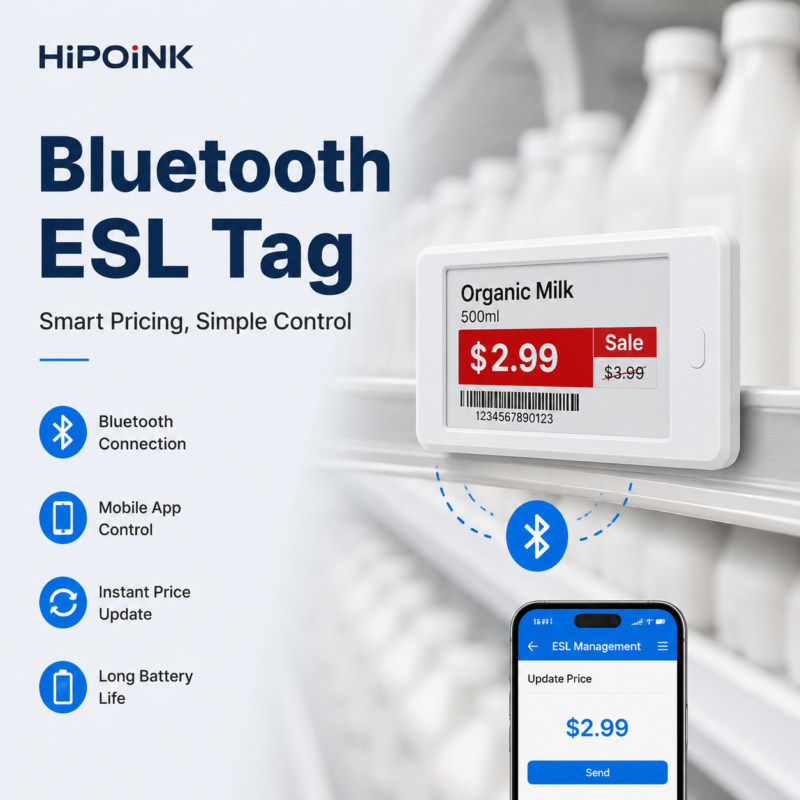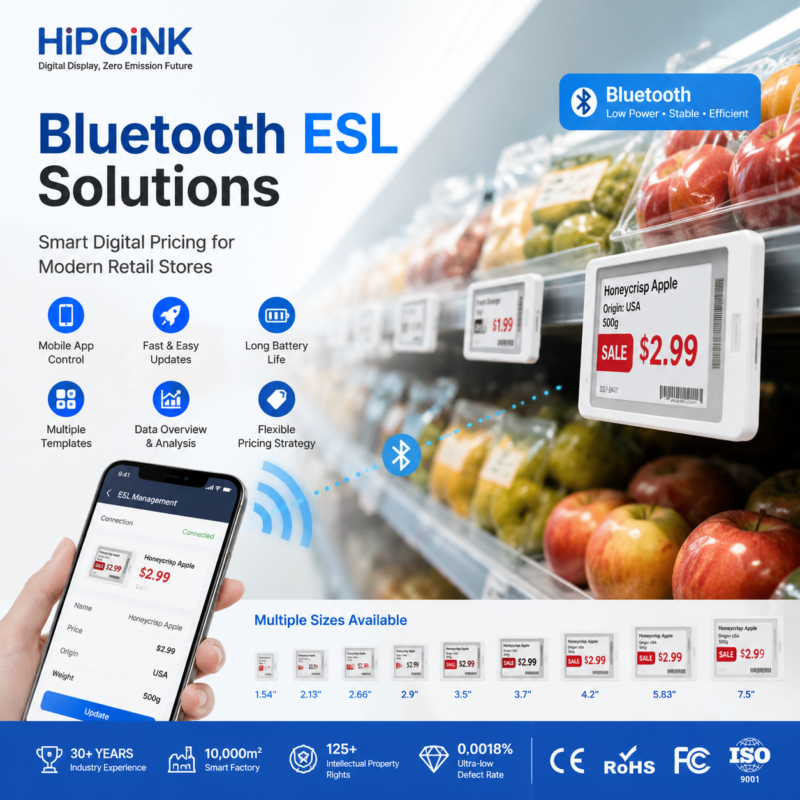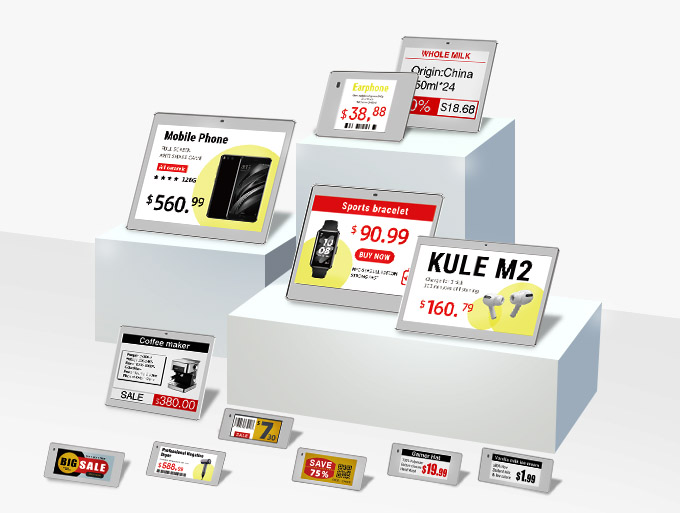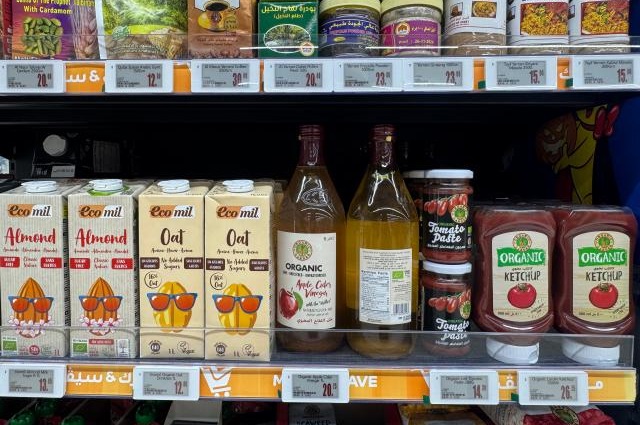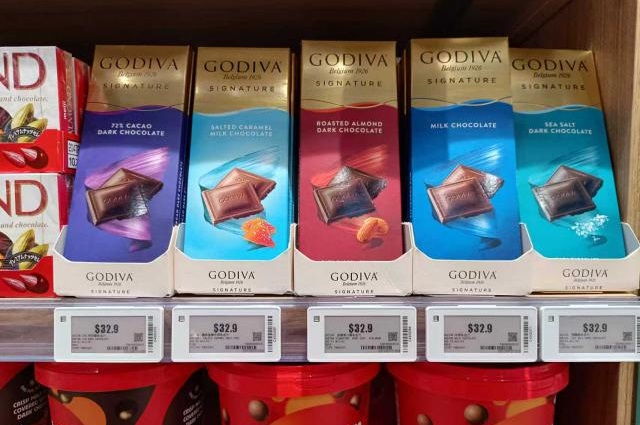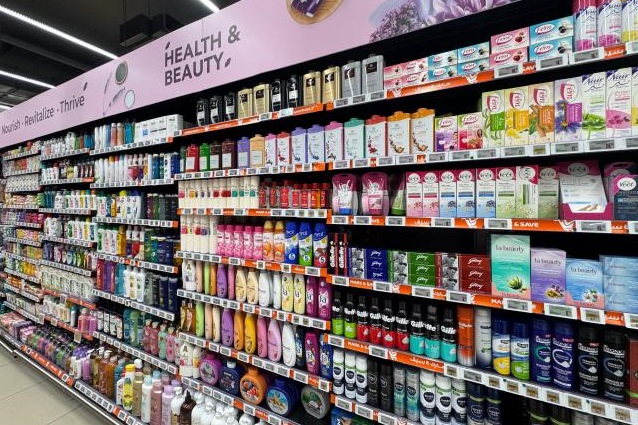


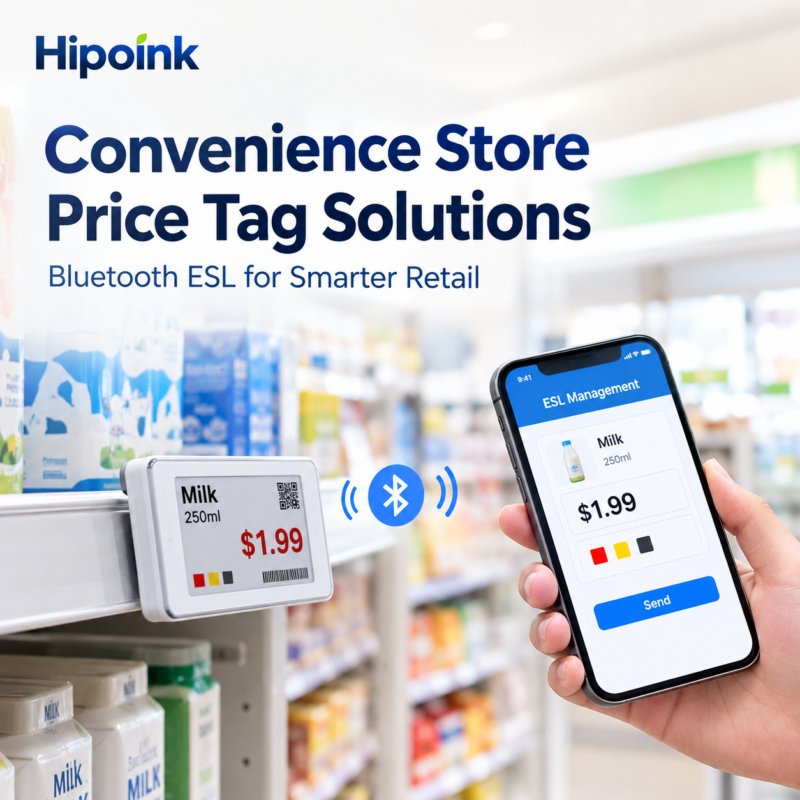
When prices change frequently, a traditional convenience store price tag can create extra work for your staff and increase the risk of inconsistent shelf information. Hipoink’s Bluetooth ESL solution gives small and independent stores a practical way to manage digital prices directly from a mobile phone. Instead of relying on a dedicated base station, you can establish communication between your smartphone and each electronic shelf label through Bluetooth. This approach suits convenience stores, bakeries, pharmacies, restaurants, and other locations where you need flexible pricing and quick updates.
Why Use a Bluetooth Convenience Store Price Tag?
A convenience store often has a compact sales area, but its prices may change because of promotions, inventory levels, seasonal products, or supplier adjustments. Replacing paper labels manually takes time and can leave old prices on shelves.
With a Bluetooth electronic shelf label, you can manage product information digitally and update labels through a mobile app.
Key application benefits include:
- Quick setup: Start using the system without a complex installation process.
- Mobile control: Communicate with the electronic shelf label through Bluetooth.
- One-click refresh: Update multiple displayed elements efficiently.
- Flexible pricing: Change prices when promotions or store conditions require it.
- Template options: Use different visual templates for product information.
- Data support: Assist with store data overview and analysis.
- Simple operation: Hipoink states that users can learn the basic operation in about 10 minutes without formal training.
This makes Bluetooth ESL particularly suitable when you want a digital price tag for small stores without building a complicated infrastructure.
How Bluetooth ESL Works in Convenience Stores
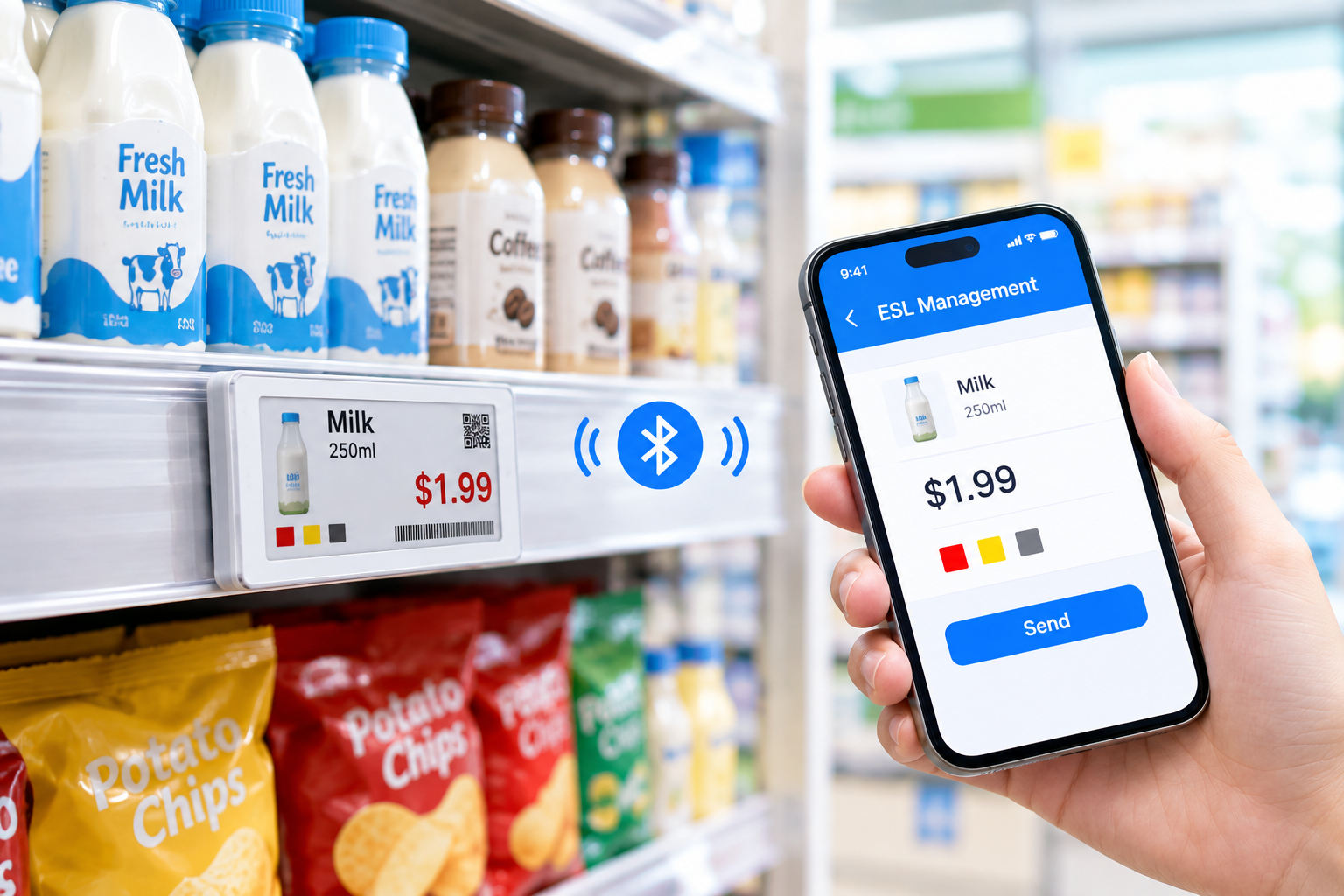
Hipoink’s Bluetooth ESL follows a similar system architecture, hardware structure, and software composition to its base station ESL solution. The main difference is the communication method: your phone connects directly with the electronic label through Bluetooth.
Mobile-Controlled Electronic Shelf Label
You can use the mobile application to manage pricing information and display content. This can help reduce repetitive manual label replacement when products receive new prices.
For a convenience store, the workflow can be straightforward:
- Select the product label that needs an update.
- Edit the price or display content through the mobile application.
- Connect your phone to the ESL through Bluetooth.
- Send the updated information to the electronic shelf label.
- Check the refreshed display before continuing with other products.
This workflow gives store operators a more direct way to manage shelf pricing, especially when each store has independent pricing requirements.
Bluetooth ESL Sizes and Display Options
Hipoink provides multiple Bluetooth electronic shelf label sizes to support different shelf layouts and product categories.
| ESL Size | Technology | Resolution | Example Application |
|---|---|---|---|
| 1.54 inch | Bluetooth | 200 × 200 | Small products |
| 2.13 inch | Bluetooth | — | Standard shelf pricing |
| 2.66 inch | Bluetooth | — | Retail products |
| 2.9 inch | Bluetooth | — | Convenience stores |
| 3.5 inch | Bluetooth | — | Larger product displays |
| 3.7 inch | Bluetooth | — | Retail shelves |
| 4.2 inch | Bluetooth | — | Larger price information |
| 5.83 inch | Bluetooth | — | Large-format displays |
| 7.5 inch | Bluetooth | — | Large shelf information |
For example, Hipoink’s 1.54-inch electronic shelf label measures 37.11 × 48.43 × 9.1 mm, weighs 18.9 g, uses a 600 mAh battery, and supports a 200 × 200 resolution. The display supports BWRY colors, giving you more flexibility than a basic single-color price display.
Bluetooth ESL vs. Traditional Paper Price Tags
Choosing a convenience store ESL depends on your store size, update frequency, and operational requirements.
| Factor | Bluetooth ESL | Traditional Paper Tag |
|---|---|---|
| Price changes | Digital update | Manual replacement |
| Communication | Bluetooth | None |
| Mobile operation | Supported | Not applicable |
| Reusable display | Yes | No |
| Template flexibility | Multiple templates | Manual printing |
| Best suited for | Frequent updates | Stable pricing |
If you regularly adjust prices or promotions, a wireless price tag can reduce the repetitive work associated with printing and replacing paper labels.
Why Choose Hipoink for Electronic Shelf Labels?
Hipoink has more than 30 years of experience in the display module industry and focuses on electronic paper modules, ESLs, and digital solutions. Its facility covers 10,000 m², with 8 automated e-paper assembly lines.
The company also reports:
- 50-person R&D team with more than 15 years of display industry experience
- 125 independent intellectual property rights
- Defect rate as low as 0.0018%
- E-paper production capabilities covering sizes from 0.7 to 43 inches
- ISO9001 quality management certification
- IATF16949 automotive industry quality management certification
- CE, RoHS, and FCC compliance
These capabilities allow Hipoink to provide electronic paper components and complete digital display solutions from one manufacturing chain.
Where Can You Use a Bluetooth Price Tag?
A Bluetooth price tag can support several retail environments:
- Convenience stores: Manage frequent price changes across compact stores.
- Bakeries: Update prices for fresh products and daily promotions.
- Pharmacies: Present pricing in a clean, professional digital format.
- Gift shops: Improve shelf presentation with customizable templates.
- Fruit shops and restaurants: Change displayed prices when product availability changes.
The key advantage is flexibility. You can select different ESL sizes according to shelf space, product dimensions, and information requirements.
FAQ
1. How does Bluetooth ESL communicate with a price tag?
The mobile phone establishes communication with the electronic shelf label through Bluetooth. This differs from systems that depend on a dedicated base station.
2. What sizes does Hipoink provide?
Hipoink lists Bluetooth ESL sizes from 1.54 inches to 7.5 inches, allowing you to select a display based on your shelf and product requirements.
3. Is Bluetooth ESL suitable for small convenience stores?
Yes. The solution is designed for scenarios where stores have independent pricing needs and want mobile-based operation without relying on a complex communication setup.
Conclusion
A convenience store price tag needs to do more than display a number when your store changes prices frequently. Hipoink’s Bluetooth ESL solution combines electronic paper display technology with direct mobile Bluetooth communication, giving you a practical option for flexible retail pricing. With more than 30 years of display industry experience, a 10,000 m² facility, 125 intellectual property rights, and certifications including ISO9001, IATF16949, CE, RoHS, and FCC, Hipoink can support customized electronic shelf label requirements for different retail environments.
CTA
If you are planning to replace paper labels with a Bluetooth ESL for convenience stores, contact Hipoink to discuss your required display size, quantity, color configuration, battery specification, and application scenario. Ask the Hipoink team about the most suitable ESL model for your store layout and pricing workflow.