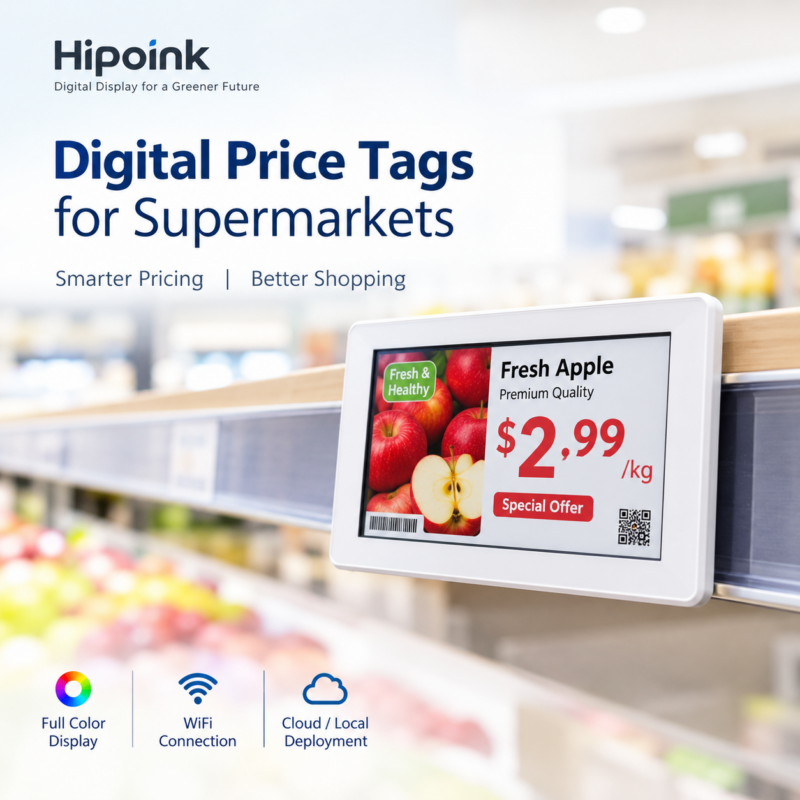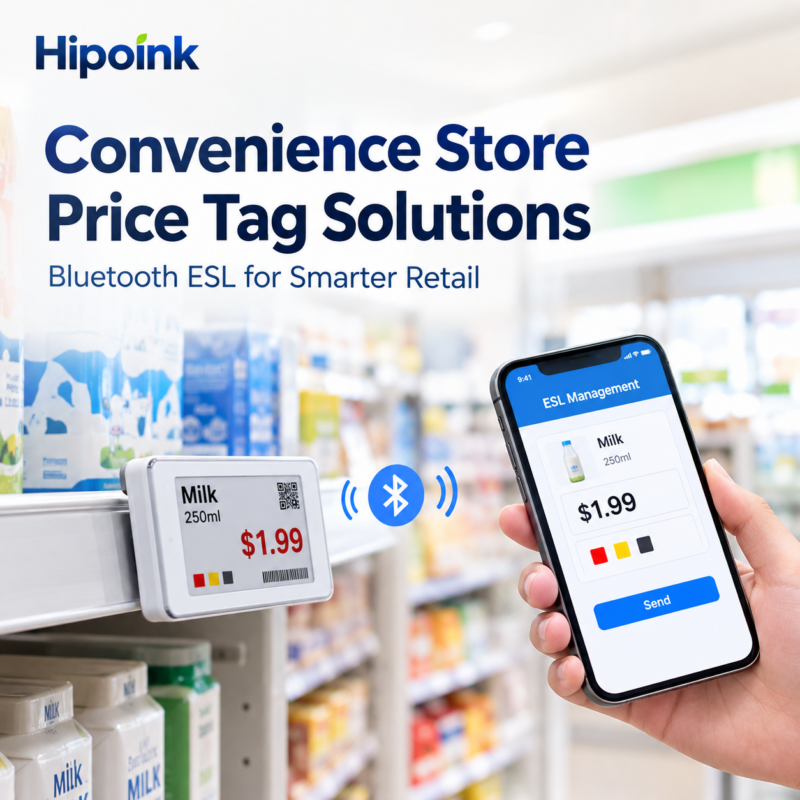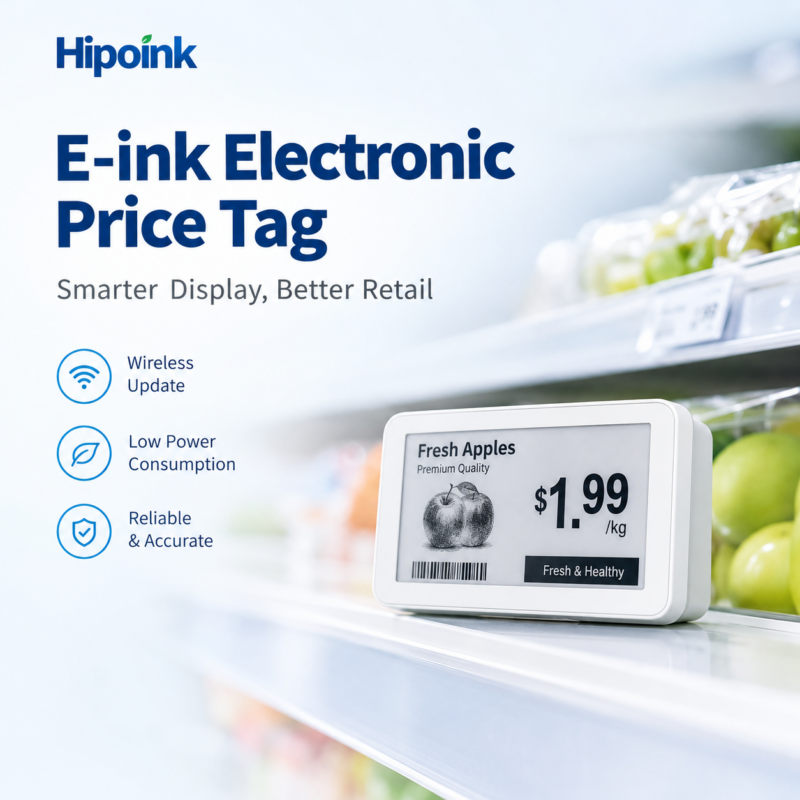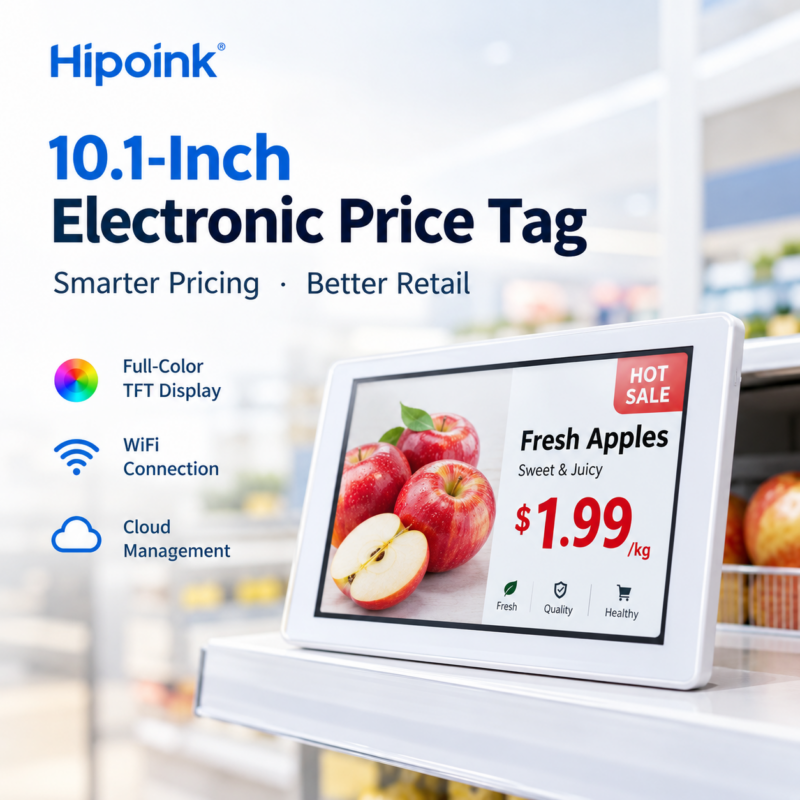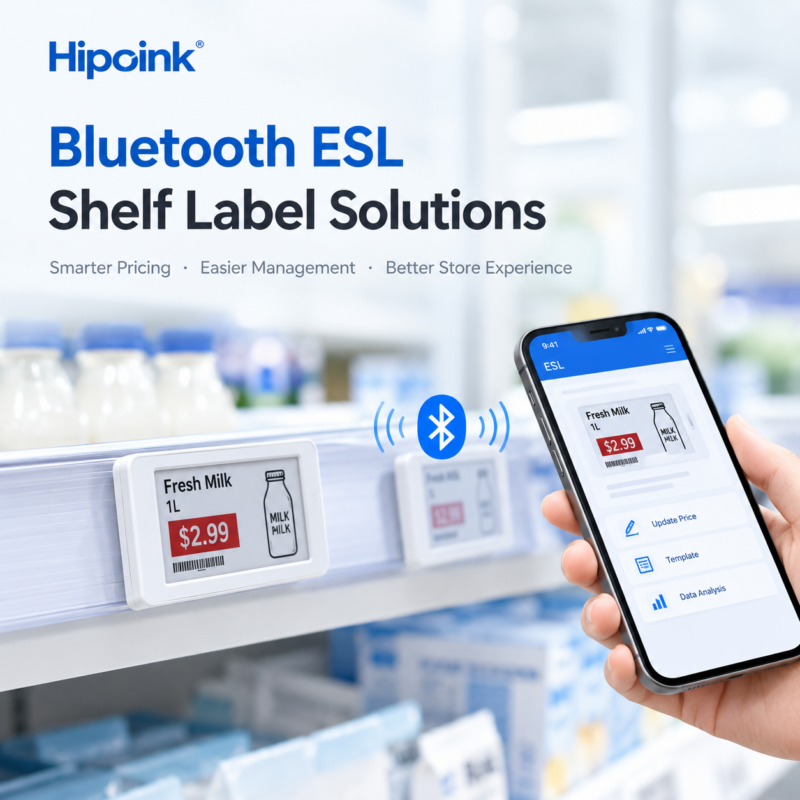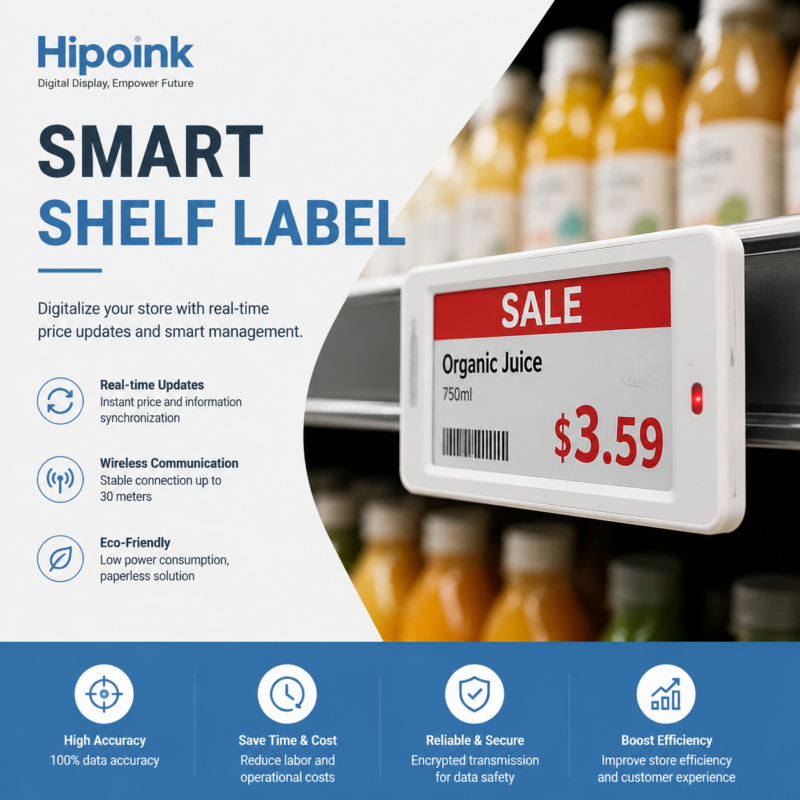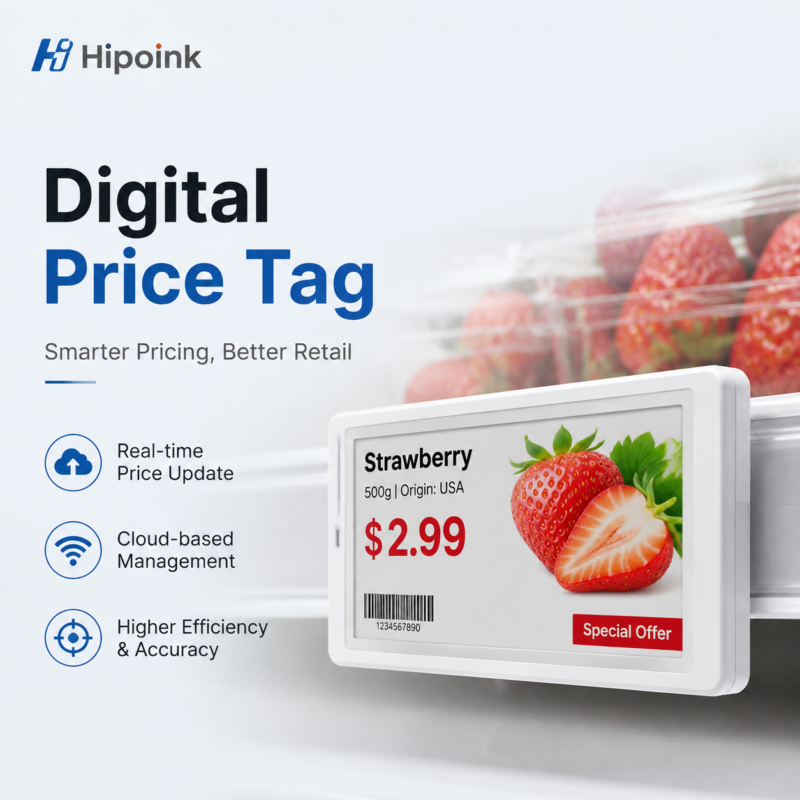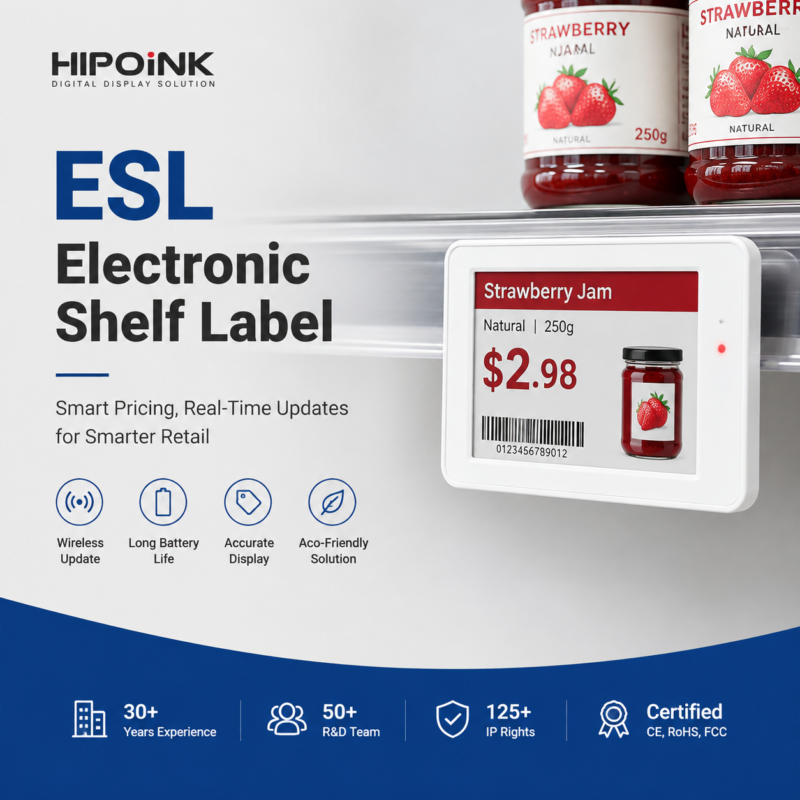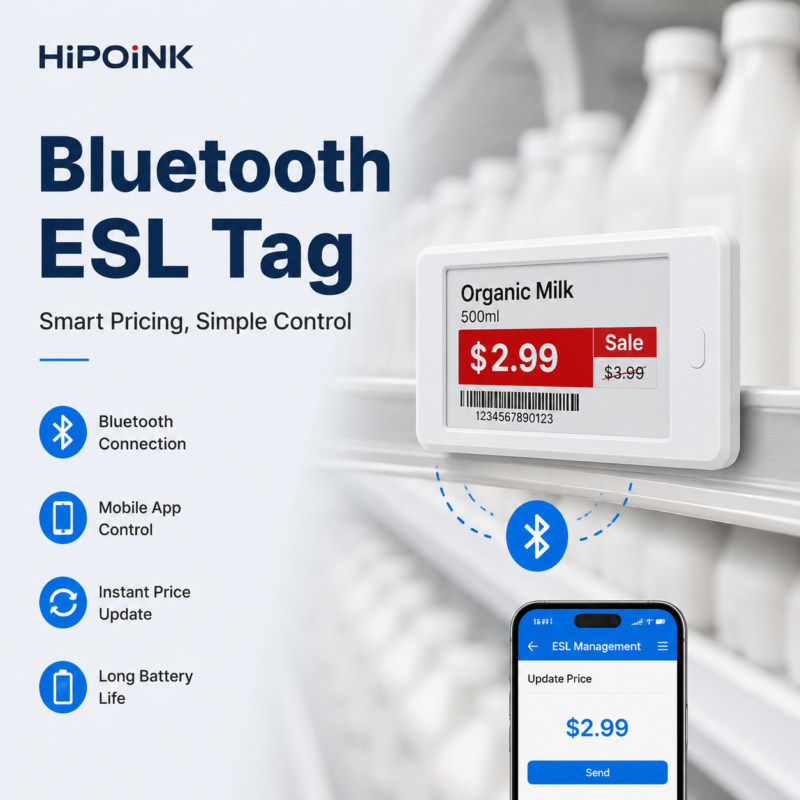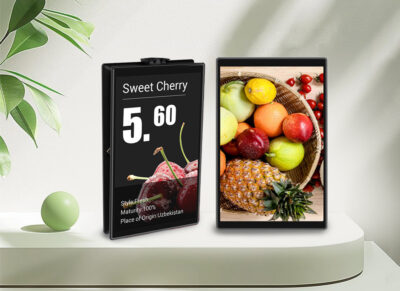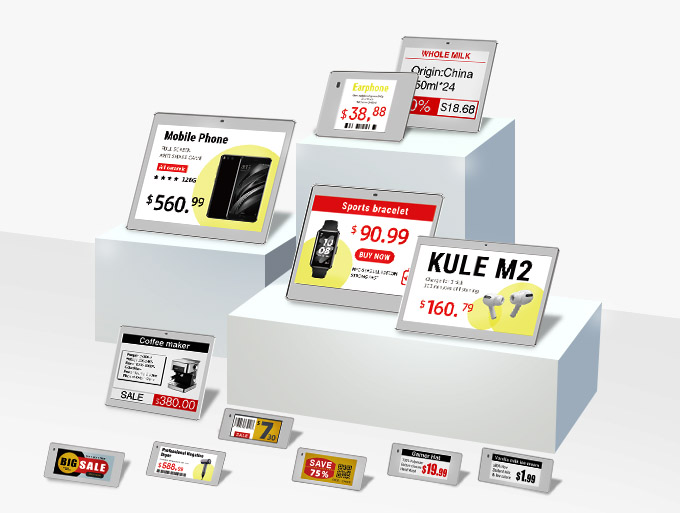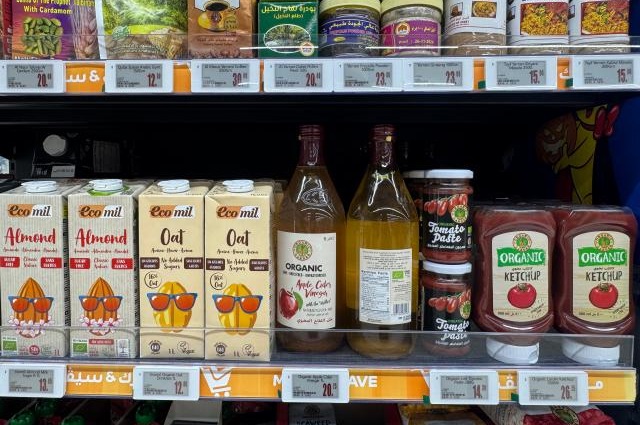


When store teams need to change hundreds of prices manually, errors and wasted labor can quickly become operational problems. A Battery-powered ESL tag gives you a practical way to replace paper labels with wireless electronic displays that can update product prices and information remotely. For supermarkets, chain stores, and warehouses, Hipoink combines e-paper display technology, wireless communication, and ESL system integration to support faster and more accurate shelf management.
Why Choose a Battery-Powered ESL Tag?
A retail environment often requires frequent price, promotion, and product information updates. Instead of replacing printed labels individually, you can use an electronic shelf label system to send updates to multiple displays from a centralized management platform.
Hipoink ESLs are designed for this workflow, with several features that support daily retail operations:
- Real-time batch updates for multiple ESLs
- Wireless communication with a maximum range of up to 30 meters, depending on the environment
- Bidirectional communication for real-time interaction
- Encrypted data transmission for reliable communication
- Replaceable batteries for easier maintenance
- IP54 protection for suitable indoor retail environments
- BWRY e-paper display for clear product and pricing information
The 1.54-inch model, for example, measures 37.11 × 48.43 × 9.1 mm and weighs 18.9 g. It uses a 600mAh battery and provides a 200 × 200 pixel resolution with 188 DPI.
Battery-Powered ESL Tag Features for Retail
Long-Term Battery Operation
A battery-powered electronic shelf label reduces the need for wired power connections at individual shelves. The 1.54-inch Hipoink ESL uses a replaceable 600mAh battery and has a working life of approximately 2–3 years under a usage condition of four updates per day.
This design can help you simplify maintenance across large numbers of shelf labels. When battery replacement is required, the replaceable battery structure makes servicing more practical.
Wireless and Bidirectional Communication
Hipoink ESL technology supports wireless communication between the management system and shelf displays. With a maximum communication distance of 30 meters under suitable physical conditions, the system can cover different shelf areas without connecting every label directly to a wired network.
Bidirectional communication also allows the system to interact with ESL devices in real time, supporting more reliable data synchronization.
Designed for Mass Deployment
Large supermarkets and warehouses may need thousands of electronic shelf labels operating together. A base-station ESL architecture can centralize data transmission and synchronization, making it easier to manage large deployments.
Hipoink provides ESL sizes ranging from 1.54 inches to 7.50 inches within its Base Station ESL product range, giving you flexibility when different shelf layouts require different display sizes.
Battery-Powered ESL Tag vs. Traditional Paper Labels
| Feature | Battery-Powered ESL Tag | Traditional Paper Label |
|---|---|---|
| Price updates | Wireless and centralized | Manual replacement |
| Update speed | Real-time batch updates | Depends on staff availability |
| Price accuracy | System-controlled | Higher risk of manual errors |
| Reusability | Yes | Limited |
| Power requirement | Battery-powered | No electronic power |
| Product information | Flexible digital display | Fixed printed content |
| Large-scale management | Suitable for centralized management | Labor-intensive |
For retailers handling frequent price changes, a retail electronic shelf label system can therefore reduce repetitive labeling work while improving consistency between system data and shelf information.
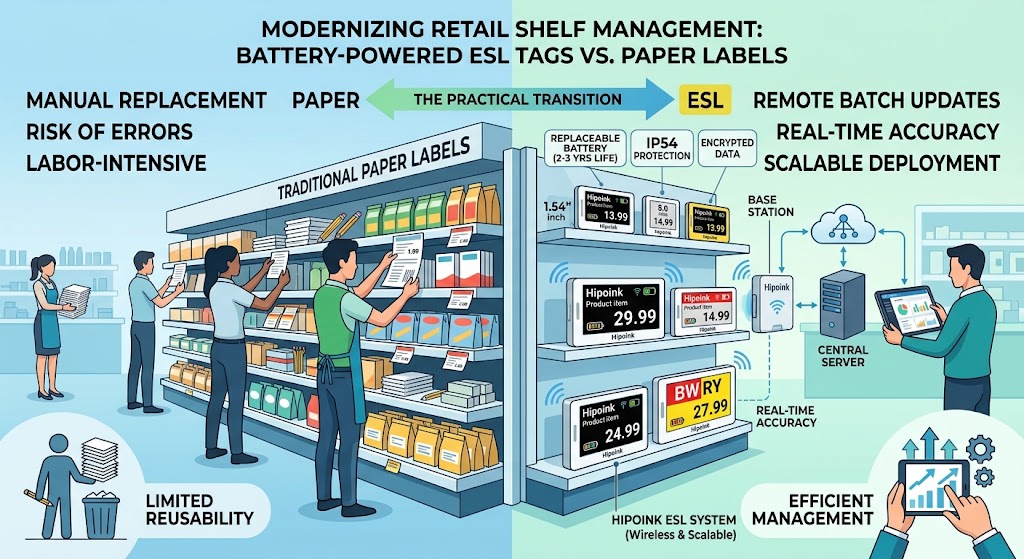
How to Deploy a Wireless ESL Tag System
You can approach an ESL deployment through the following steps:
- Evaluate your store layout
Identify shelf areas, communication distances, label quantities, and display size requirements. - Select the appropriate ESL size
Hipoink offers multiple BWRY ESL sizes, including 1.54, 2.13, 2.66, 2.90, 3.50, 3.70, 4.20, 5.83, and 7.50 inches. - Install the base station and ESL tags
Position the communication equipment according to the store environment and required coverage. - Connect the management system
Integrate ESL data with your existing retail or management workflow where applicable. - Configure product information
Upload pricing, product details, promotions, inventory information, and other relevant content. - Test synchronization
Check wireless communication, update accuracy, display performance, and coverage before full deployment.
Why Work with Hipoink?
Hipoink has more than 30 years of experience in the display module industry and has been developing e-paper technology since 2019. Its 10,000 m² facility includes 8 automated e-paper assembly lines, while its R&D team has filed for 125 independent intellectual property rights.
The company also maintains a reported defect rate of 0.0018% and provides products compliant with CE, RoHS, and FCC requirements. Hipoink’s manufacturing capabilities cover e-paper film cutting, module production, CF laminating, FL laminating, TP laminating, and EMR laminating, supporting a vertically integrated supply chain.
This manufacturing and R&D experience allows you to discuss not only individual ESL tags but also customized electronic paper display components and complete ESL system solutions.
FAQ
1. How long does a battery-powered ESL tag last?
The Hipoink 1.54-inch model has a stated working life of approximately 2–3 years with four updates per day. Actual battery performance can vary according to update frequency and operating conditions.
2. Can ESL tags update prices remotely?
Yes. Hipoink ESL systems support wireless batch updates, allowing you to change pricing and product information from the management system without manually replacing individual shelf labels.
3. Are battery-powered ESL tags suitable for supermarkets?
Yes. Hipoink’s Base Station ESL solution is designed for applications including large supermarkets, chain stores, and large warehouses, where centralized management and large-scale synchronization are important.
Conclusion
A Battery-powered ESL tag can help you replace repetitive paper-label changes with a more efficient electronic shelf management process. With wireless communication, replaceable batteries, real-time updates, multiple display sizes, and centralized management capabilities, Hipoink provides an ESL solution designed for supermarkets, chain stores, warehouses, and other retail environments.
Get an ESL Solution for Your Business
Contact Hipoink with your required ESL size, estimated quantity, store layout, communication requirements, and integration needs. The Hipoink team can help you evaluate the appropriate battery-powered electronic shelf label configuration for your deployment.