


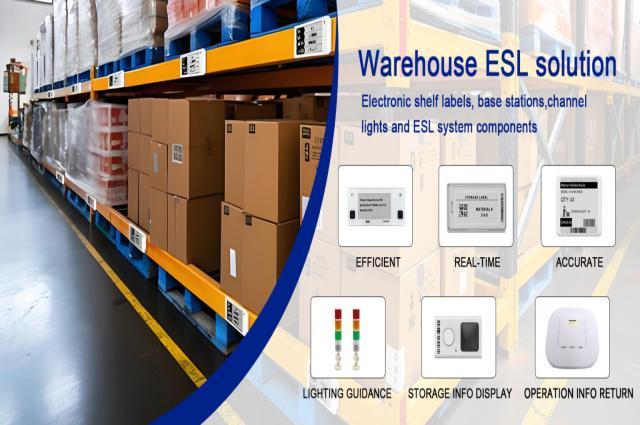
Modern warehouses are expected to process inventory faster, reduce picking errors, and maintain real-time stock visibility across increasingly complex operations. However, many facilities still rely on paper labels, manual updates, and disconnected warehouse workflows that slow productivity and increase operational mistakes. A Smart Warehouse ESL Solution helps solve these challenges by introducing real-time electronic shelf labels, lighting guidance, and wireless inventory synchronization into daily warehouse operations.
As warehouse environments become more data-driven, operators need systems that can instantly display accurate storage information, guide warehouse staff visually, and communicate directly with ERP or WMS platforms. Hipoink provides a complete smart warehouse ESL ecosystem that combines Electronic Shelf Labels, Base Stations, Passage Lights, and centralized ESL management software into one integrated warehouse display solution.
Built on low-power electronic paper technology, the system improves warehouse visibility, supports faster inventory movement, and reduces manual operational errors.
Why Traditional Warehouse Operations Create Inefficiency
Conventional warehouse management methods often depend on printed labels and manual inventory tracking. While these systems may appear simple, they usually create operational blind spots when warehouse activity increases.
Common warehouse challenges include:
- No visual guidance for picking or replenishment
- Difficulty locating products quickly
- Inventory information not updated in real time
- Manual identification of product codes and storage numbers
- High risk of operational errors
- Delayed communication between warehouse systems and workers
In fast-moving inventory environments, even small mistakes can lead to shipment delays, stock discrepancies, or unnecessary labor costs.
This is why more warehouses are upgrading to digital warehouse labeling systems with wireless ESL technology.
How the Smart Warehouse ESL System Works
The Hipoink Smart Warehouse ESL Solution consists of four main components:
- Electronic Shelf Labels
- Passage Lights
- Base Stations
- ESL Management System
The system communicates wirelessly through 2.4GHz private communication technology.
When the warehouse management system sends a command, the ESL software decodes the instruction and transmits it through the base station. The electronic labels and passage lights immediately respond by refreshing storage information or activating LED guidance.
At the same time, operators can press label buttons or use PDA devices to return task information directly back to the warehouse management platform.
This creates a real-time digital workflow between warehouse staff and inventory systems.
Real-Time Inventory Display Improves Warehouse Visibility
Paper labels cannot update dynamically during daily warehouse activity. This often creates confusion when inventory locations or quantities change frequently.
The Hipoink electronic shelf labels display important warehouse information such as:
- Product names
- SKU numbers
- Storage locations
- Picking instructions
- Inventory quantities
- Warehouse task status
Because the labels synchronize with ERP or WMS systems, warehouse information remains continuously updated.
This improves inventory transparency while reducing manual verification work.
LED Lighting Guidance Speeds Up Picking Operations
Large warehouse environments often waste time during product searching and order picking.
The integrated passage light system provides clear visual guidance for:
- Product picking
- Inventory replenishment
- Goods receiving
- Storage positioning
When warehouse tasks are activated, LED lights guide operators directly to the correct shelf position.
This reduces walking time and improves picking accuracy, especially in high-density warehouse layouts.
For logistics centers handling thousands of daily inventory movements, visual picking guidance significantly improves operational efficiency.
Open API Integration Simplifies System Compatibility
Many warehouses already use ERP or WMS platforms. Replacing existing infrastructure completely is rarely practical.
The Hipoink solution supports open API integration, allowing smooth communication with:
- Warehouse Management Systems
- ERP software
- Inventory databases
- PDA terminals
- Logistics management platforms
This flexibility helps warehouses upgrade gradually without disrupting existing workflows.
Customizable Buttons Support Real-Time Operation Feedback
Manual reporting slows warehouse responsiveness.
The customizable label buttons allow operators to instantly confirm tasks directly from the shelf label itself.
This enables:
- Real-time operation feedback
- Faster inventory synchronization
- Immediate task confirmation
- Improved warehouse coordination
The ESL system transmits operator input wirelessly back through the base station to the WMS platform.
As a result, warehouse managers gain more accurate operational visibility in real time.
Low-Power Electronic Paper Technology Reduces Maintenance
The Hipoink-ESL-55A uses EPD electronic paper display technology designed for long-term warehouse deployment.
Key specifications include:
- 2.13-inch electronic paper display
- 212×104 resolution
- 175° viewing angle
- Black and white display
- 2.4GHz wireless communication
- Replaceable CR2450 batteries
- Ultra-low standby current
Compared with traditional LCD displays, E Ink technology offers several advantages:
- Lower power consumption
- Better readability under lighting
- Reduced glare
- Longer battery life
- Lower maintenance requirements
The lightweight ABS+PC structure also improves durability for industrial warehouse environments.
Wireless Deployment Creates Greater Flexibility
Traditional wired warehouse systems can be difficult to expand or reorganize.
The Hipoink Smart Warehouse ESL Solution uses wireless communication between labels, lights, and base stations, helping warehouses achieve:
- Faster installation
- Flexible shelf arrangement
- Easier warehouse expansion
- Lower infrastructure complexity
- Simplified maintenance
The base station supports ceiling, table, or wall mounting, making deployment more adaptable to different warehouse layouts.
Common Warehouse Applications
Logistics Distribution Centers
High-volume fulfillment centers require accurate picking and rapid inventory updates.
The ESL system improves:
- Order processing speed
- Picking efficiency
- Inventory visibility
- Warehouse coordination
Manufacturing Warehouses
Factories managing raw materials and production components benefit from clearer inventory tracking and real-time storage information.
E-Commerce Fulfillment
E-commerce warehouses frequently process rapid inventory changes during peak order periods.
Real-time ESL synchronization helps reduce stock mismatches and fulfillment delays.
Medical and Pharmaceutical Storage
Digital shelf labels improve inventory traceability while reducing manual recording errors in regulated storage environments.
Comparing ESL Systems With Traditional Warehouse Labels
Traditional Warehouse Labels
Common limitations include:
- Manual updates
- Delayed inventory information
- High labor dependency
- Increased operational errors
- Limited scalability
Smart Warehouse ESL Systems
Modern digital warehouse systems provide:
- Real-time inventory updates
- Wireless management
- Visual LED guidance
- Faster picking workflows
- Better inventory accuracy
- Easier ERP/WMS integration
For modern warehouse operations, digital ESL systems provide greater scalability and operational efficiency.
Why Hipoink Leads in Electronic Paper Technology
Hipoink has focused on electronic paper technology for over 30 years.
Its capabilities include:
- 125 independent intellectual property rights
- 10,000㎡ manufacturing facility
- 8 automated e-paper assembly lines
- 0.0018% defect rate
- CE, FCC, and RoHS certifications
- Full electronic paper production chain integration
This manufacturing ecosystem helps ensure stable product quality, scalable production, and long-term customization support.
Future Trends in Smart Warehouse Management
Warehouses are rapidly transitioning toward paperless, automated, and data-driven operations.
Electronic shelf label systems are becoming increasingly important for:
- Smart inventory management
- Warehouse automation
- Real-time logistics visibility
- Digital picking systems
- Intelligent warehouse analytics
As supply chains continue evolving, digital warehouse infrastructure will play a critical role in improving operational responsiveness and inventory accuracy.
Conclusion
A modern Smart Warehouse ESL Solution helps warehouses improve inventory visibility, reduce operational errors, and accelerate picking efficiency through real-time electronic display technology.
The Hipoink solution combines electronic shelf labels, wireless communication, LED passage lights, and open API integration into a scalable digital warehouse management platform. By supporting real-time inventory synchronization and smarter warehouse workflows, the Smart Warehouse ESL Solution creates a more efficient, accurate, and future-ready warehouse environment.